Rankability is one of the cleanest content-optimization tools I’ve used.
It’s also one of the easiest to outgrow.
I started looking for rankability alternatives the way most people do.
A client was paying for it, the bill kept climbing, and they kept asking why a tool that mostly scored content cost more than their entire rank-tracking stack.
So I shortlisted nine tools, ran the same article through each one (same keyword, same SERP, same brief), and watched closely where each one helped and where it quietly fell apart.
Here’s the short version, because I know you’ve got ten tabs open: the best rankability alternative for most teams is Zutrix. It does Rankability’s core job. SERP-based briefs and real-time content scoring, and then keeps going into rank tracking, backlinks, site audits, and AI search visibility, starting at a fraction of the price.
But “best for most” isn’t “best for everyone.”
So I’ve ranked all nine rankability alternatives below with a straight answer on who each one actually fits.
Table of Contents
How I Evaluated These Rankability Alternatives
I didn’t rank these on feature counts.
I ranked them on what actually matters when you’re pulling Rankability out of a real workflow and dropping something else in.
Five things decided the order:
- Content optimization quality: Does the brief reflect the live SERP, and is the score something you’d trust enough to hand a writer?
- Breadth beyond scoring: Rankability’s biggest limitation is that it mostly stops at on-page content. Tools that also handle tracking, audits, and backlinks save you from paying for three more subscriptions.
- AI search visibility: Showing up in ChatGPT and Google’s AI Overviews is part of the job now.
- Pricing and trial: Rankability starts at $99/month with no free trial, so anything cheaper with a real way to test it earns points.
- Collaboration and support: Can you hand a writer access without giving away your whole account?
Every tool below is judged against those five.
Where it wins, I say why.
Where it loses, I say that too.
The 9 Best Rankability Alternatives, Reviewed
Now, the part that actually took weeks.
Here’s what each of these rankability alternatives felt like to use, what it does well, who it’s for, and where it falls down.
Prices were accurate at the time of writing, but tool pricing shifts constantly; check each vendor’s page before you buy.
1. Zutrix (Best Overall Rankability Alternative)
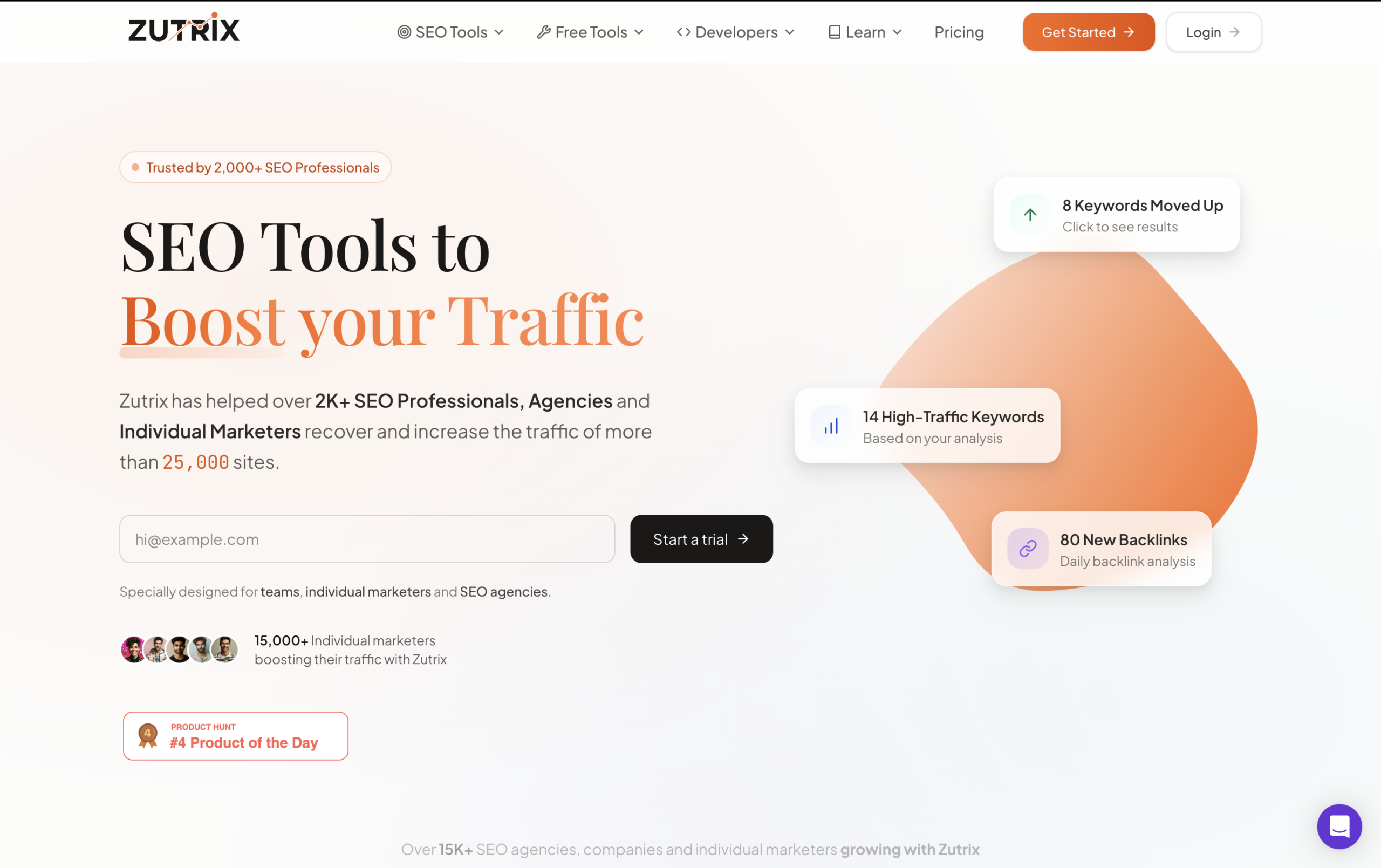
Zutrix surprised me.
I went in expecting a rank tracker with a content feature bolted on, and found the one tool here that covers Rankability’s core job and everything Rankability makes you buy elsewhere.
Its content editor, Magic Content, works the way Rankability’s does.
Pull the live SERP, build a brief with target length, headings, and NLP terms, then write while a content score updates in real time.
If you’ve used Rankability’s optimizer, the muscle memory carries straight over.
The difference is everything around it: rank tracking for up to 5,000 keywords, a 200+ point site audit, backlink monitoring, and AI search visibility across eight models.
Key features:
- Magic Content editor (SERP-based briefs, real-time scoring, NLP terms, and AI writing assistance)
- Rank tracking for up to 5,000 keywords daily across mobile and desktop
- 200+ point site audit with Core Web Vitals, plus backlink monitoring up to 75,000 links/month
- AI search visibility tracking across 8 AI models, including ChatGPT
- White-label reports and writer-share links that don’t expose your account
Best for: Solo SEOs, content teams, and agencies that want content optimization, tracking, audits, backlinks, and AI visibility in one tool instead of four.
Pricing: Starts around $19/month, with a 7-day trial for $7 and a money-back guarantee (Rankability has no free trial at all).
2. Surfer SEO
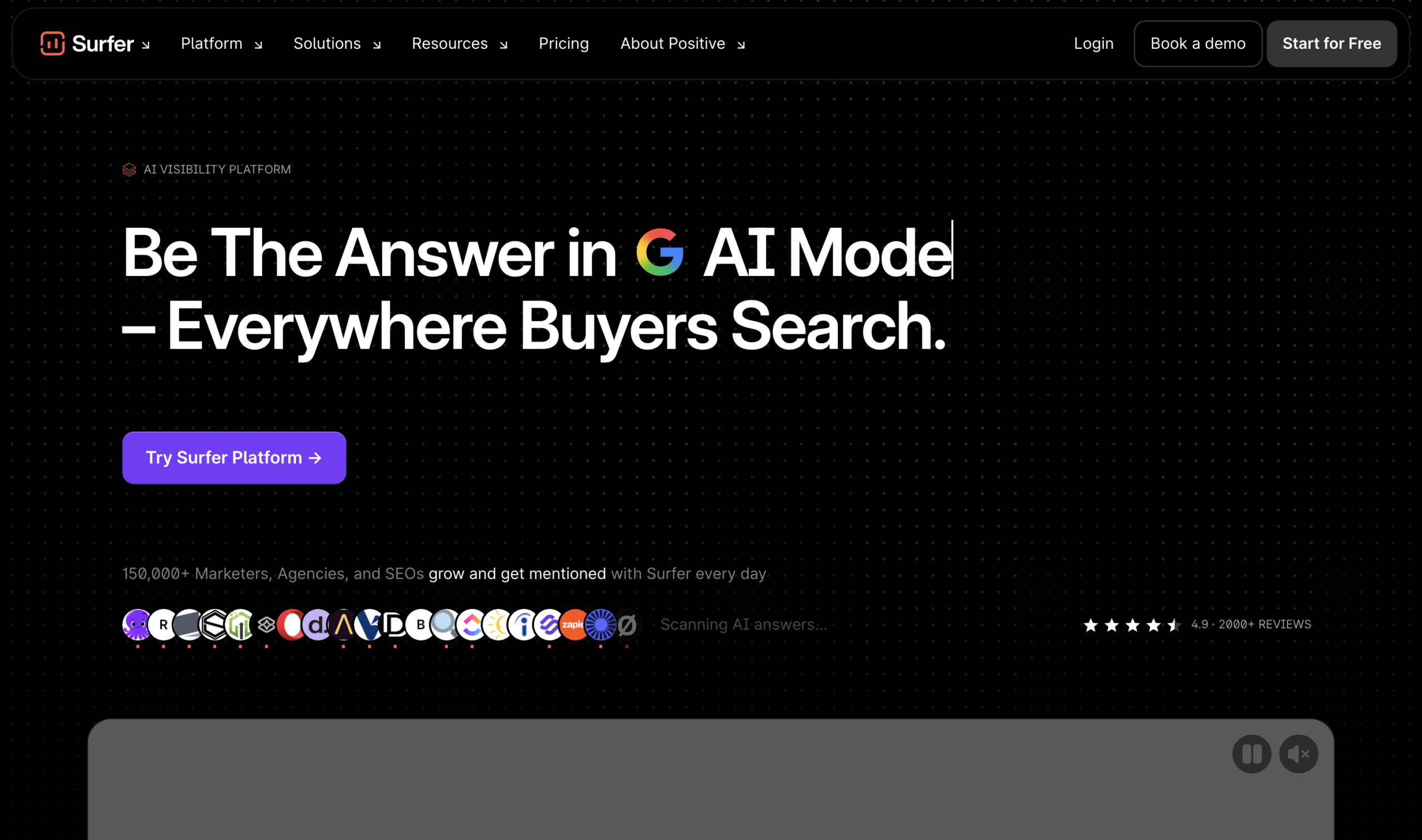
Surfer is the tool most people picture when they hear “content optimizer,” and for years, it was my default.
It pioneered NLP-based optimization, and the Content Editor still nails the core job: real-time score, term suggestions, structure guidance, and a clean writing surface.
Two things keep it out of the top spot as a rankability alternative.
First, it’s largely on-page only, like Rankability. You’ll still need separate tools for rank tracking and audits.
Second, Surfer has reportedly changed ownership recently, and any time a tool you depend on changes hands, it’s worth watching how the roadmap and pricing move before you commit a whole team to it.
Key features:
- Real-time NLP content score with term and structure suggestions
- SERP-based content editor with word-count and heading targets
- Content audit for refreshing and re-optimizing existing pages
- AI outline and writing tools available as add-ons
Best for: Teams that want the familiar, proven NLP optimizer and already have tracking handled elsewhere.
Pricing: Starts around $119/month. No traditional free trial, though there’s a money-back window.
3. Clearscope
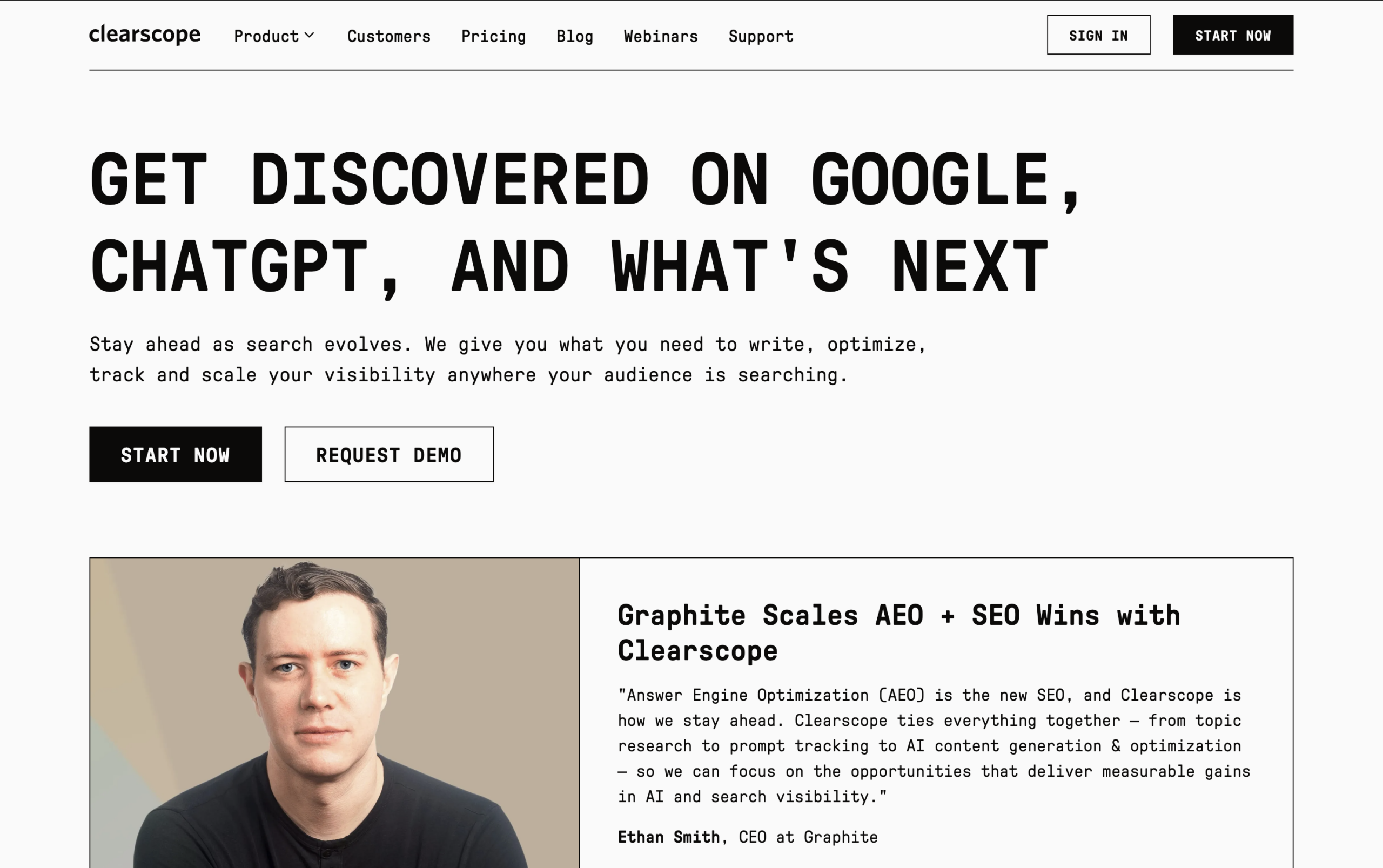
Clearscope is the premium pick, and it feels like it from the first login.
The A-to-F grading is the most intuitive scoring system I tested. The keyword and related-term suggestions are precise, and the Google Docs integration means writers barely have to learn anything new.
The catch is focus and price.
At around $129/month, it’s one of the priciest options here, and it’s deliberately narrow (content optimization and not much else).
As an alternative to rankability, it’s a sideways move on scope: you’re swapping one specialized content tool for another, just with nicer grading and a heavier invoice.
Key features:
- A-to-F content grading that writers can follow at a glance
- Precise keyword and related-term recommendations
- Native Google Docs and WordPress integrations
- Readability analysis and content inventory tracking
Best for: Editorial teams and publishers who care more about content quality and writer experience than breadth or budget. Pricing: Starts around $129/month.
4. Frase
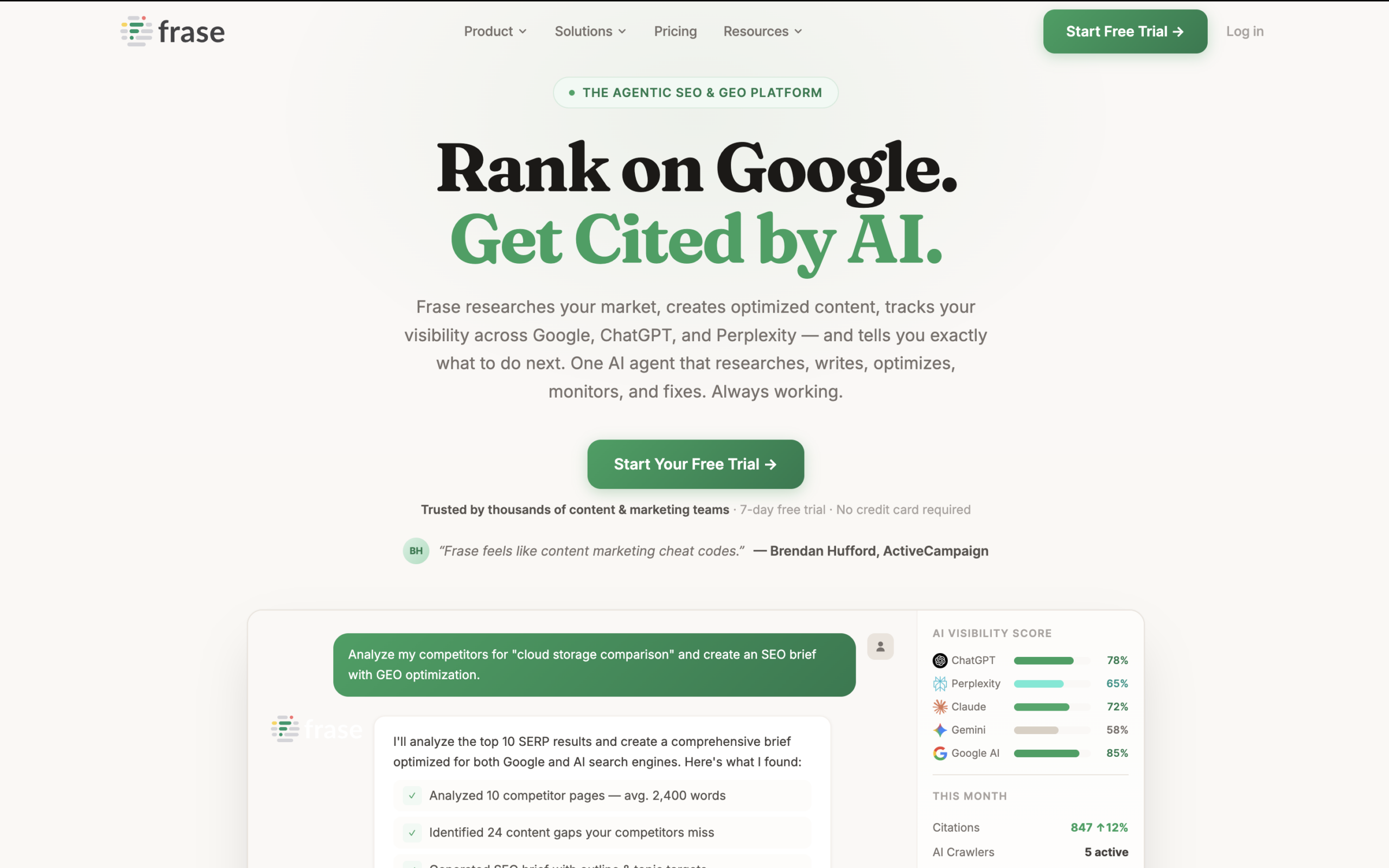
Frase is what I reach for when I need a brief in a hurry.
It scrapes the SERP, builds an outline, and gets you from keyword to working draft faster than almost anything else I tested, and it does it cheaply, with plans starting around $49/month plus a low-cost trial.
It’s lighter on deep optimization than Surfer or Clearscope, and like most rankability alternatives in this price range, it doesn’t touch rank tracking or site audits. But for solo creators and small teams who mostly need fast, research-backed briefs, it punches well above its weight.
Key features:
- Fast SERP-based outline and content brief generation
- AI writing tools for drafting and rewriting
- Content score with topic and term recommendations
- Question research pulled straight from “People Also Ask”
Best for: Freelancers and small teams who want quick briefs without a big monthly commitment.
Pricing: Starts around $49/month.
5. MarketMuse
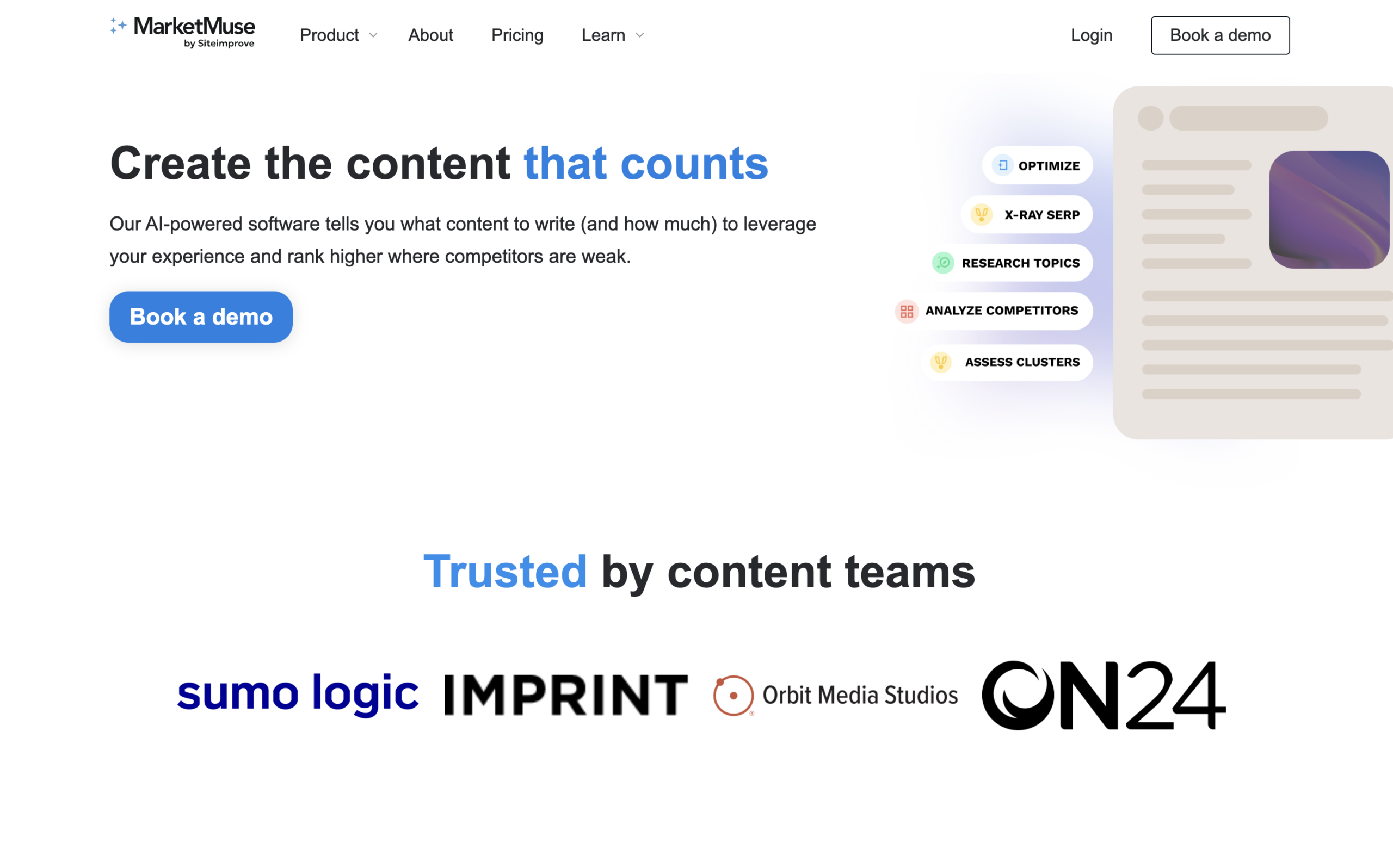
MarketMuse thinks bigger than a single article.
Where Rankability optimizes the page in front of you, MarketMuse maps your whole topic landscape. What to write, what to update, and where your content has authority gaps.
The planning depth is genuinely useful if you’re running a serious content operation rather than polishing one post at a time.
It’s also the most complex tool here, and the pricing climbs quickly once you move past the free plan.
As a rankability alternative, it’s less a like-for-like swap and more a strategic planning layer you’d add on top.
Key features:
- Topic modeling and content cluster planning
- Content inventory and authority-gap analysis
- Competitive content scoring and AI-generated briefs
- Personalized difficulty scores based on your site’s authority
Best for: Content strategists and larger teams who want to plan at the topic-cluster level, not just optimize individual posts.
Pricing: Free plan available; no public pricing available for the paid plan.
6. SE Ranking
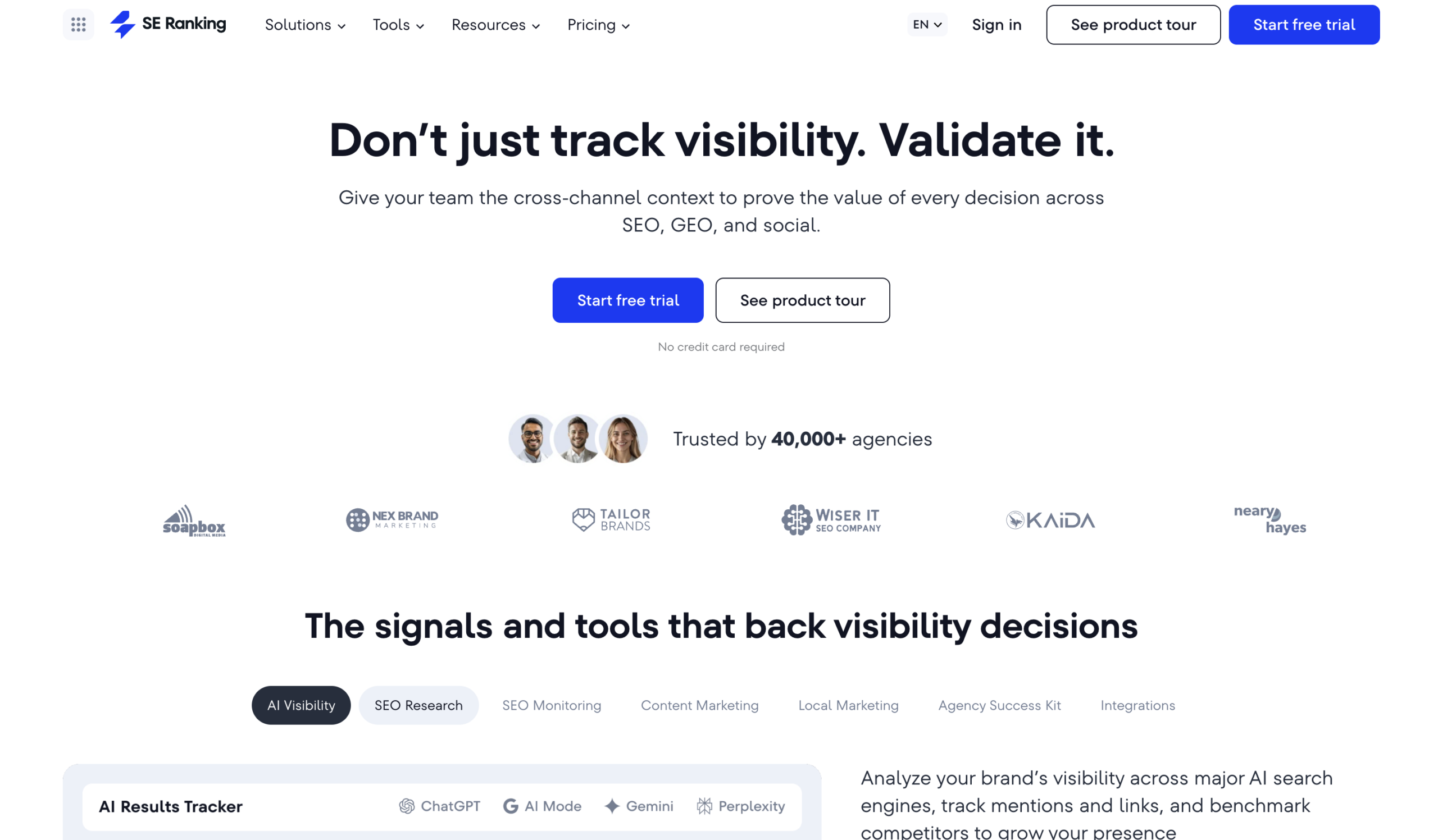
SE Ranking was the closest thing to Zutrix in spirit. A broad SEO suite that also includes a content editor.
You get rank tracking, site audits, keyword research, and a content tool with optimization scoring, plus newer AI visibility features, all under one roof.
That breadth is exactly why it makes this list of rankability alternatives.
The honest caveat is that its content editor isn’t quite as central to the product as Rankability’s or Zutrix’s Magic Content.
It’s one feature inside a bigger suite rather than the main event.
But for teams that want everything in one place at a fair price, it’s a strong all-rounder.
Key features:
- Rank tracking across search engines with daily updates
- Site audit and on-page SEO checks
- Keyword research and competitor analysis
- Content editor with optimization scoring, plus AI visibility tracking
Best for: Teams that want a complete SEO suite with content optimization included.
Pricing: Starts around $129/month, with a 14-day free trial.
7. RankIQ
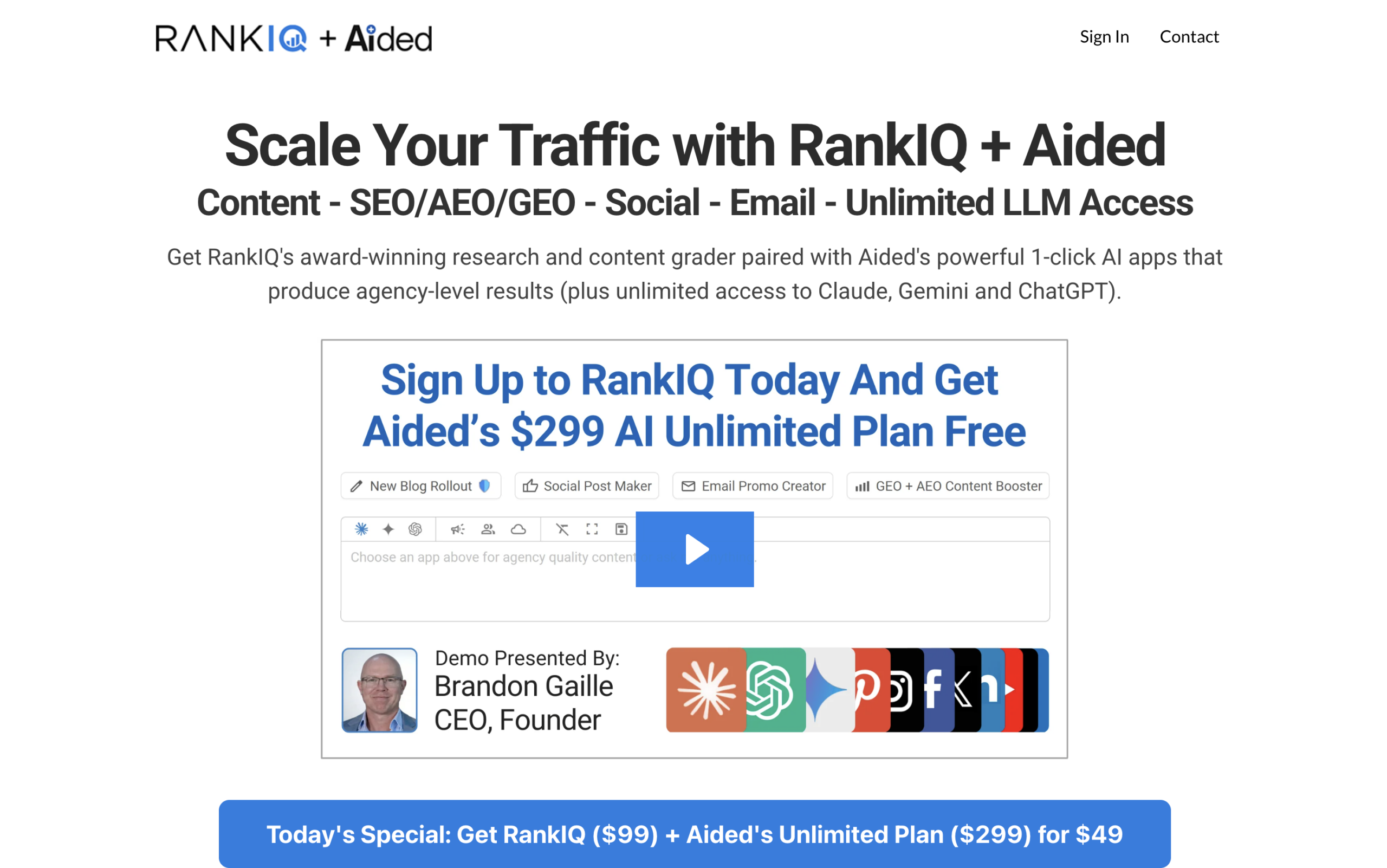
RankIQ is built for bloggers, and it doesn’t pretend otherwise.
It hands you a curated keyword library, tells you which topics to cover, and gives you a clean, checklist-style optimizer for the post and the title.
There’s no cockpit full of dials, just “add these terms, polish the title, you’re done.”
That simplicity is both the appeal and the ceiling.
As a rankability alternative, it works nicely for solo bloggers, but it lacks the agency-grade controls, multi-writer workflows, and breadth that pull people toward Rankability in the first place.
Key features:
- Hand-curated, low-competition keyword library by niche
- AI content brief showing the exact topics to cover
- Checklist-style content optimizer
- Title analyzer and a fast “update old posts” workflow
Best for: Bloggers and solo creators who want guided, low-effort optimization.
Pricing: Starts around $99/month.
8. Scalenut
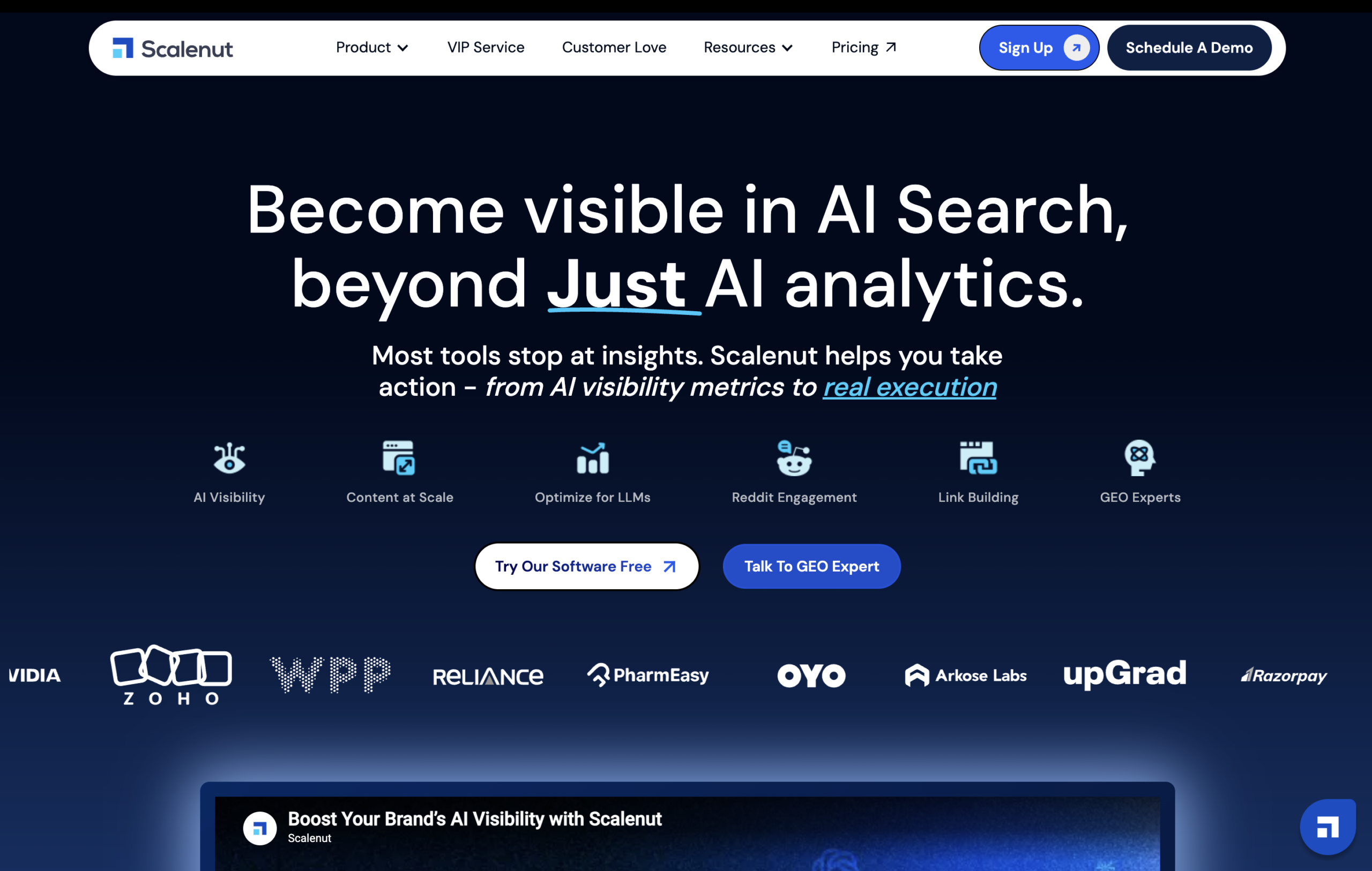
Scalenut blends AI writing and optimization into one flow.
Its guided mode can take you from keyword to a full first draft fast, while the SEO score and key-term suggestions keep that draft pointed at the SERP.
If your bottleneck is producing volume, it’s one of the more efficient rankability alternatives for getting words on the page.
The trade-off is the familiar one: it’s strongest on content and AI writing, lighter on the wider SEO stack, so you’ll still pair it with tracking and audit tools.
The AI-first output also needs a careful editorial pass.
A fast draft isn’t a finished draft, and Scalenut won’t pretend otherwise for you.
Key features:
- Cruise Mode for keyword-to-draft AI writing
- SEO content score with NLP key-term suggestions
- SERP-based content briefs and topic clusters
- Content optimizer with AI copywriting templates
Best for: Teams that want AI writing and optimization in a single, fast workflow.
Pricing: Starts around $59/month, with a 7-day trial.
9. Semrush
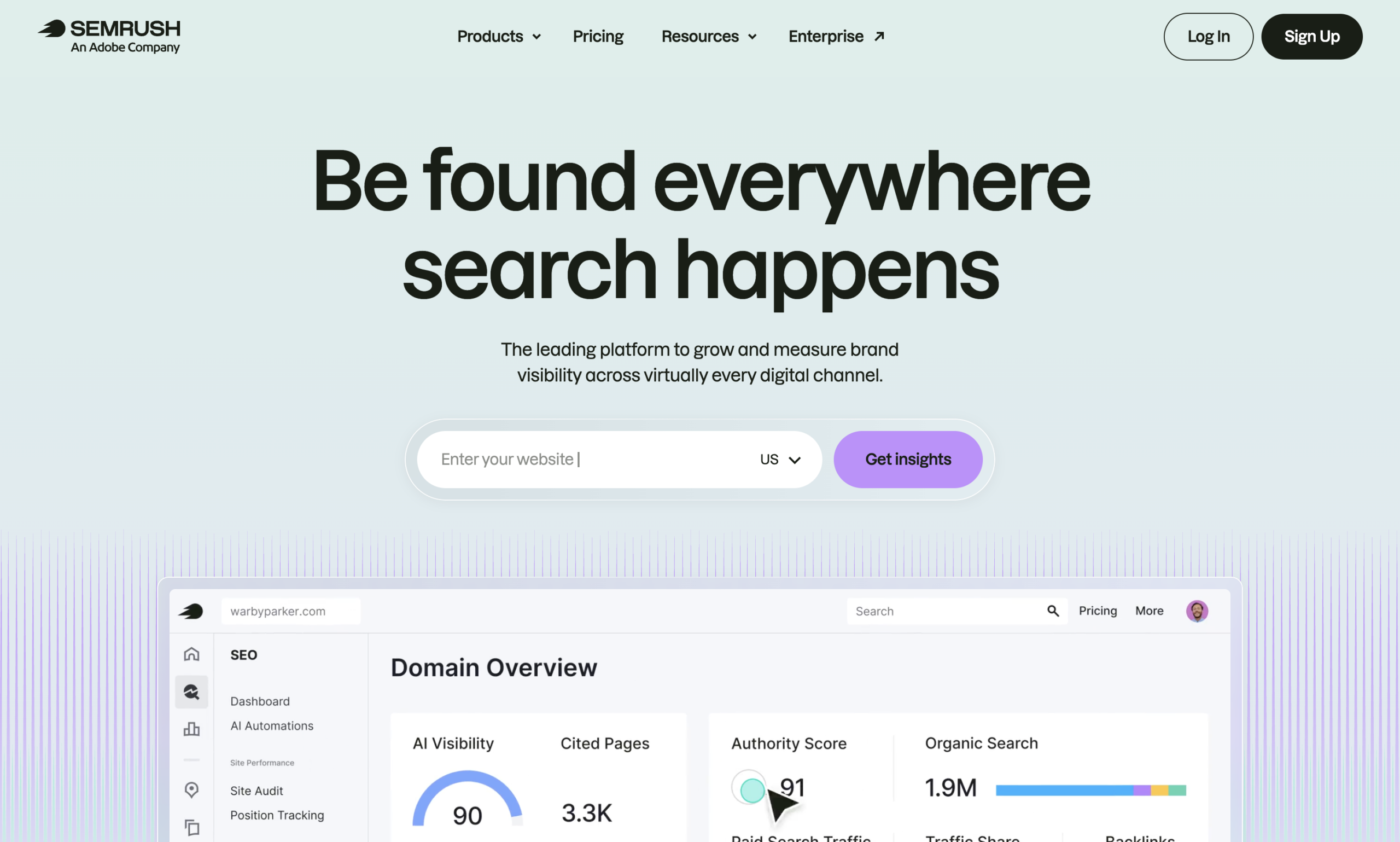
Semrush is the heavyweight.
If your real need is the deepest data set in SEO, like keyword research, competitive intelligence, backlinks, rank tracking, and an enormous toolkit, nothing here matches its depth, and it now folds in AI visibility tracking too.
But as an alternative to rankability specifically, it’s overkill for most.
Content optimization is one add-on inside a huge platform; the learning curve is real, and the price reflects all that breadth.
You’d choose Semrush because you want absolutely everything, not because you want a focused content tool.
Key features:
- Keyword Magic Tool with a massive keyword database
- Backlink analysis and deep competitive intelligence
- Position tracking and site audit
- SEO Writing Assistant for optimization, plus AI visibility tools
Best for: Enterprises and data-hungry teams that want the most comprehensive platform available.
Pricing: Starts around $199/month.
Final Words
After nine tools and a stack of nearly identical test articles, the pattern was hard to miss.
The best rankability alternative isn’t a cheaper clone of Rankability. It’s a tool that does the content optimization just as well and then doesn’t stop there.
Rankability is good at what it does.
But it’s a specialist in a market that’s quietly rewarding generalists. Search is splitting across Google, and a growing list of AI engines, and the teams pulling ahead are the ones who can optimize a page, track where it ranks, audit what’s broken, and see whether ChatGPT is citing them (without stitching four separate tools together every Monday morning).
That’s the real takeaway from comparing these rankability competitors.
The question was never “what’s most like Rankability?”
It’s “what does the whole job?”
Answer that one honestly, and your shortlist gets very short.